

Urea Fertiliser: Specs Every Buyer Should Check
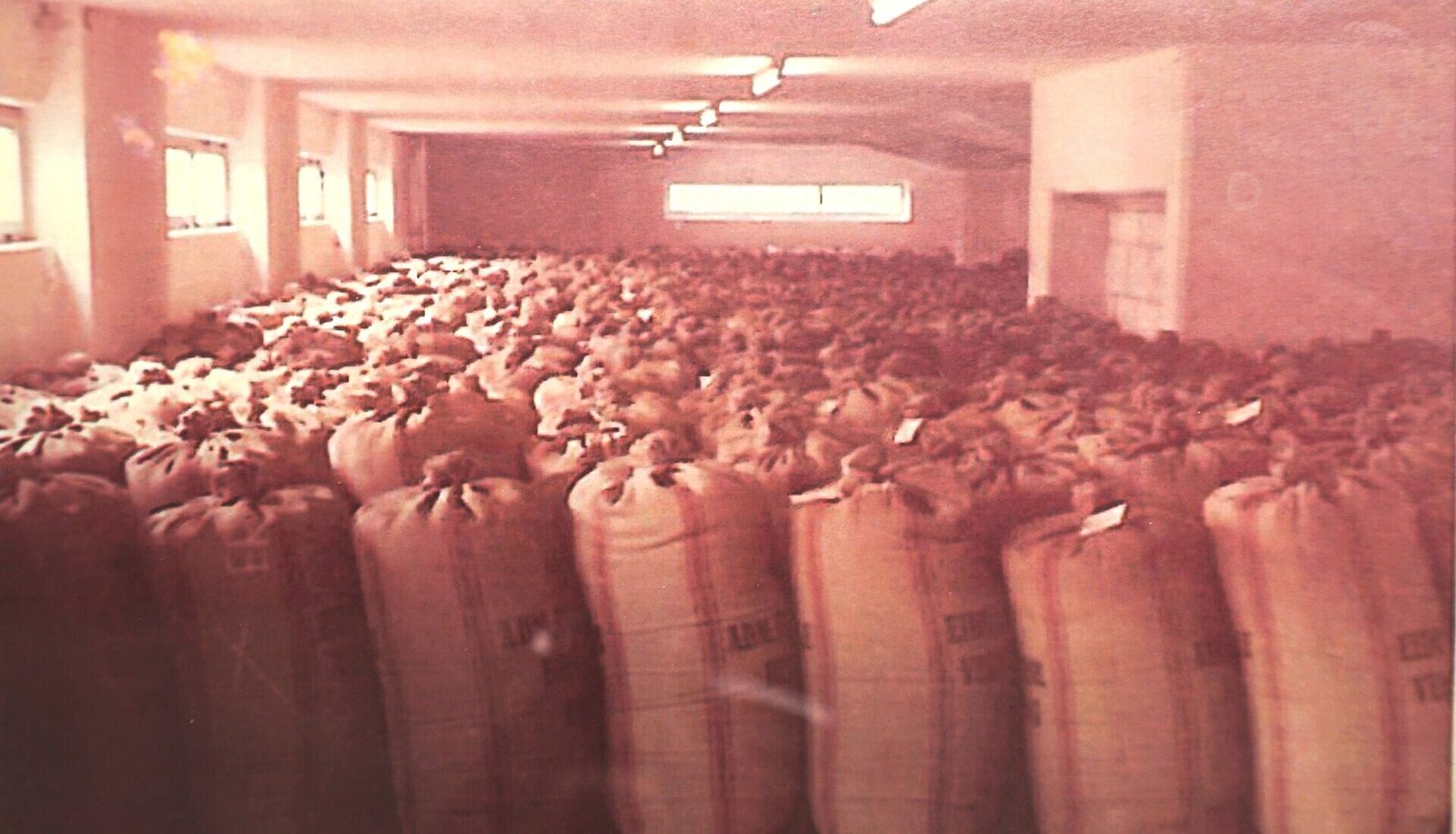
Photo: Cunolf, CC BY-SA 4.0, via Wikimedia Commons. Representative image.
Urea is the most concentrated solid nitrogen fertiliser in the world, and for that reason the most traded. At 46% nitrogen, every tonne carries more nutrient than ammonium nitrate or ammonium sulphate, which makes it cheaper to ship per kilogramme of N. But not all urea behaves the same in a spreader or in the soil. A few numbers on the certificate of analysis tell you most of what you need to know.
Why urea matters to southern African farmers
South Africa no longer makes most of the nitrogen it uses. Nitrogen products made up about 64% of fertiliser import volume between 2019 and 2023, according to an analysis in SA Grain magazine (September 2025), with urea arriving mainly from Saudi Arabia, Russia, Qatar, China and Oman. That makes local prices sensitive to global gas markets, freight and the rand. Grain SA tracks this closely in its regular input monitoring reports, which are worth reading before planting season.
Neighbouring markets, including Mozambique, Zimbabwe, Zambia and Malawi, draw on the same import flows, much of it through Durban and Richards Bay.
The core specification
| Parameter | Typical fertiliser grade value | Why it matters |
|---|---|---|
| Total nitrogen | Min 46.0% | The nutrient you are paying for |
| Biuret | Max 1.0% | Can damage seedlings and leaves at higher levels |
| Moisture | Max 0.5% | Higher moisture leads to caking and hard lumps |
| Granule size (granular) | Typically 2 to 4 mm, 90% min | Spreading width and evenness |
| Granule size (prilled) | Typically 1 to 2.8 mm, 90% min | Dissolves faster, shorter spread width |
| Crushing strength (granular) | Stated on CoA, higher is better | Resists dust and breakage in handling |
| Anti-caking treatment | Usually formaldehyde treated, stated on CoA | Keeps it free flowing in storage |
| Colour and form | White, free flowing | Visual check for contamination or moisture |
| HS code | 3102.10 | Customs classification |
A producer’s datasheet will look similar. Yara’s prilled urea sheet, for example, lists 46.0% N, max 1.0% biuret and 0.5% moisture.
Granular or prilled?
Prilled urea is formed by dropping molten urea through a tall tower so it cools into small round beads. Granular urea is built up in layers in a granulator, giving larger, harder particles.
- Granular spreads further and more evenly with mechanical spreaders, makes less dust and blends well with other granular fertilisers of similar size. It is the default choice for broadacre grain farming.
- Prilled dissolves quickly, which suits fertigation and liquid blends, and is common for hand application on smallholder plots.
Mixing granular and prilled in a blend causes the particles to separate in transit and in the spreader. Pick one size range and stick with it.
Biuret: the number worth a second look
Biuret forms when urea is overheated during manufacture. Standard fertiliser grade allows up to 1.0%. For foliar sprays on sensitive crops such as citrus and pineapple, growers usually want low-biuret urea, commonly specified at 0.25% or below. If your end users spray urea onto leaves, specify low biuret clearly.
Technical urea is a different product
Urea for diesel exhaust fluid (AdBlue) and some industrial uses is made to much tighter purity limits, including very low metals and insolubles, and is not interchangeable with fertiliser grade. Do not let an offer blur the two.
Packing, storage and loading
Urea is hygroscopic: it absorbs moisture from the air once humidity rises past its critical point, which is easily reached in a Durban summer. Packing options:
- 50 kg woven polypropylene bags with an inner liner.
- 1 MT bulk bags for blenders and co-operatives.
- Bulk in vessel holds for large parcels.
A 20ft container typically carries 25 to 27 MT in bags, depending on the line’s payload limit. Urea is heavy, so 40ft containers are not normally used. Store bags off the floor, under cover and away from walls that sweat.
Registration in South Africa
Fertilisers sold in South Africa must be registered under the Fertilizers, Farm Feeds, Agricultural Remedies and Stock Remedies Act 36 of 1947. Urea is a Group 1 fertiliser. Registration needs a South African registrant, a certificate of analysis from an accredited laboratory and an approved label, and the Department of Agriculture says the process takes three to six months. Importers into other countries face their own rules, so check before you order.
Buyer’s checklist
- Form: granular or prilled, with size range stated.
- Nitrogen min 46%, biuret max stated, moisture max stated.
- Producer and origin named.
- Independent inspection for quality and weight at loading.
- Bag type, liner and marking agreed.
- Registration or import permit sorted for the destination.
- Arrival timed for the planting window, not after it.
Planning your nitrogen for the season?
We source urea from partner origins such as the Middle East and ship through Durban to southern and East African buyers. Send us your form, volume and delivery window, and request a quote or WhatsApp us on +27 (0)67 163 9326. We will tell you honestly what lead times look like this season.