

A Buyer’s Guide to Cashew Kernel Grades
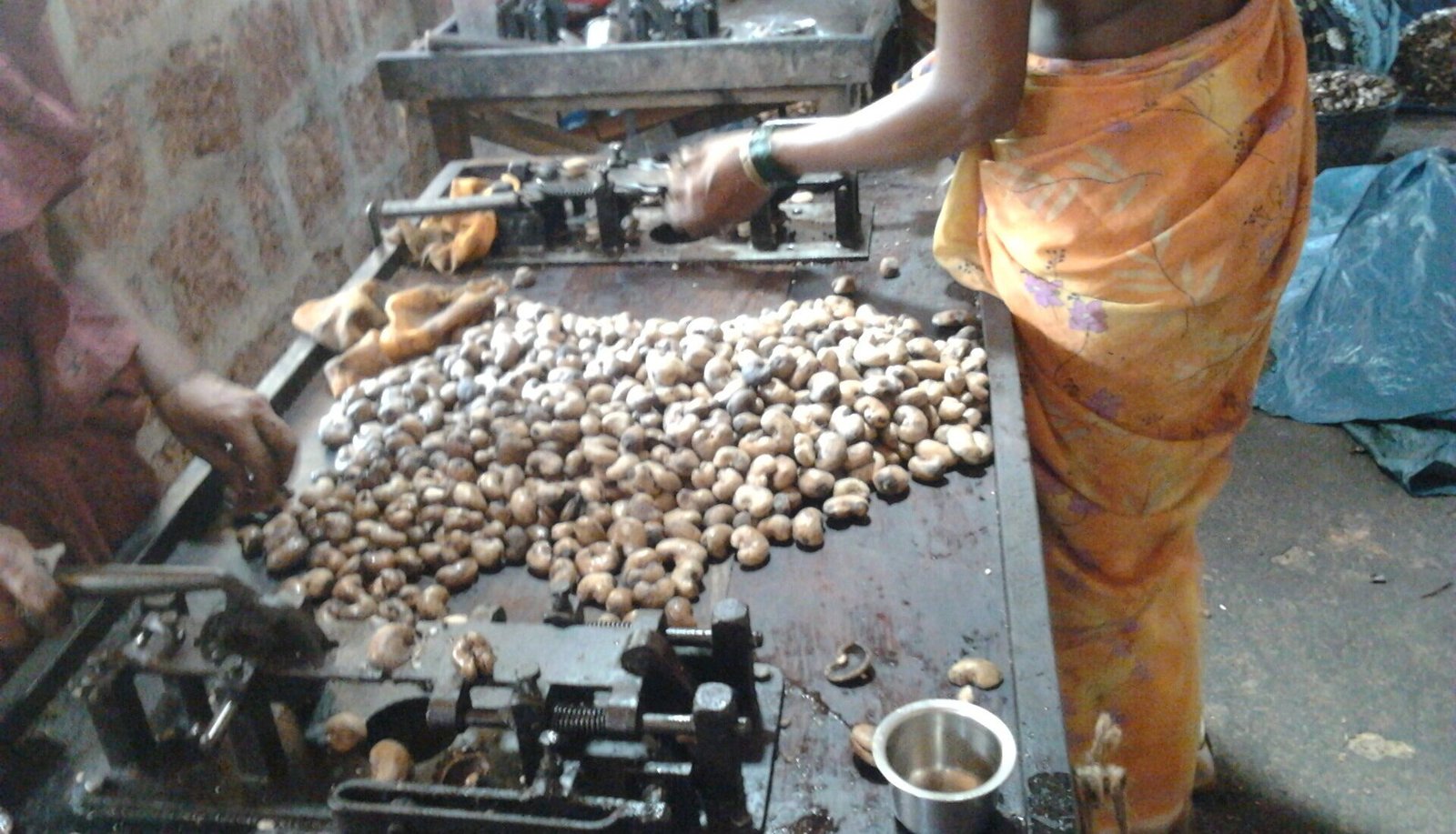
Photo: Sandeep Vengurlekar, CC0, via Wikimedia Commons. Representative image.
Cashew contracts are short. A typical line reads something like “W320, current crop, AFI spec, 50 lb vacuum tins”. Every word in that line carries weight, and most disputes we see between buyers and processors start with one of those words meaning something slightly different to each side. This guide walks through the grade system the way a buyer should read it.
The standard most of the trade uses
The reference point for kernel grading in international trade is the specification published by the Association of Food Industries (AFI) in the United States. Many origins also have national standards, and some buyers write their own, but if your contract says “AFI spec” you are agreeing to that document’s definitions of size, colour, defects and tolerances. Read it once in full. It is only a few pages.
How a grade code is built
A code like W320 combines two things: a colour or quality letter and a size number.
The letters: colour and shape
- W (White Wholes): whole kernels of uniform white, pale ivory or light ash colour.
- SW (Scorched Wholes): wholes with light brown colouring from longer roasting or drying. Same eating quality, slightly lower price.
- SSW (Scorched Wholes Seconds): darker or more speckled wholes, sometimes slightly shrivelled.
- DW (Dessert Wholes): wholes with deeper discolouration or blemishes, usually sold for roasting and processing.
- B, S and pieces: Butts are crosswise breaks, Splits are lengthwise halves, and pieces are graded by sieve (Large White Pieces, Small White Pieces, Baby Bits and so on).
Under AFI rules a kernel still counts as a whole if no more than one eighth of it has broken off.
The numbers: kernels per pound
The number is the maximum count of kernels per pound (454 g). A lower number means bigger nuts. W180 is the “king of cashews”, W320 is the volume workhorse of the trade, and W450 is the smallest whole grade commonly sold.
| Grade | Kernels per lb | Kernels per kg (approx.) | Typical buyer |
|---|---|---|---|
| W180 | 140 to 180 | Up to about 395 | Premium gift packs, luxury retail |
| W210 | 180 to 210 | 395 to 465 | Premium retail, Middle East trade |
| W240 | 220 to 240 | 485 to 530 | Retail snacking, roasted and salted |
| W320 | 300 to 320 | 660 to 706 | The most traded grade: retail, roasting, mixes |
| W450 | 400 to 450 | 880 to 990 | Value retail, trail mixes, food service |
Counts per kilogramme are from the AFI specification. Size is checked by count, not by eye, so ask your inspector to report the actual count per pound on the sample drawn.
Tolerances: the part buyers skip
No lot is perfect, and the specification allows for that. Under AFI rules a whole grade may contain up to 10% by weight of wholes from the next lower size grade, and up to 10% broken kernels or pieces. Two lots can both be “W320 AFI” and still look different on the table. If your product is a premium retail pack where appearance sells, write tighter tolerances into the contract and agree them before loading, not after arrival.
Moisture, packing and shelf life
AFI sets kernel moisture at 3 to 5%. Above that range, kernels soften and become vulnerable to mould and rancidity on a long voyage. Below it, they turn brittle and break in handling.
Export kernels are usually packed in sealed tins or laminated flexible bags, flushed with carbon dioxide and nitrogen to keep oxygen out. AFI requires food-grade CO2 at a minimum of 60%, with nitrogen as the balance. The classic pack is two 50 lb (22.68 kg) units per carton, and a 20ft container typically carries about 700 cartons, roughly 15.9 MT net.
A pre-contract checklist
- Grade and colour stated in full (W320, not “320”).
- Standard named (AFI, or your own spec attached).
- Maximum moisture and defect tolerances agreed in writing.
- Crop year stated. Kernels from an older crop are not necessarily poor, but you should know.
- Packing: tin or flexible pack, gas flush, carton marking, pallets or loose loaded.
- Pre-shipment inspection: who draws samples, which lab, and whose result is final.
- Food safety parameters for your market, including aflatoxin limits and microbiology. EU limits are stricter than many others.
- Documents: certificate of origin, phytosanitary certificate, certificate of quality and any fumigation certificate your importer requires.
Where East African kernels fit
East Africa grows some of the best-flavoured raw cashew nuts in the world, and Tanzania alone reported a record crop of 617,683 tonnes for the 2025/26 season, up from about 528,000 tonnes the season before, according to the agriculture ministry figures reported in May 2026. More of that crop is now being processed in the region rather than shipped raw, which gives buyers more choice of origin-processed kernels. Mozambique and Kenya add further supply.
A good grade is only half the deal. The other half is a lot that arrives looking like the sample.
Talk to us about your grade
If you are weighing W240 against W320 for a new retail line, or you want a second opinion on a specification before you sign, we are happy to help. Send us your target grade, volume and destination port and we will come back with what is available this season. You can request a quote through the site or WhatsApp us on +27 (0)67 163 9326.